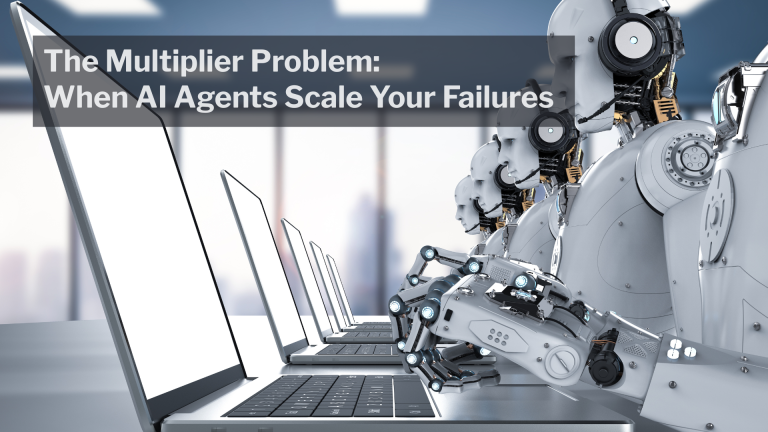
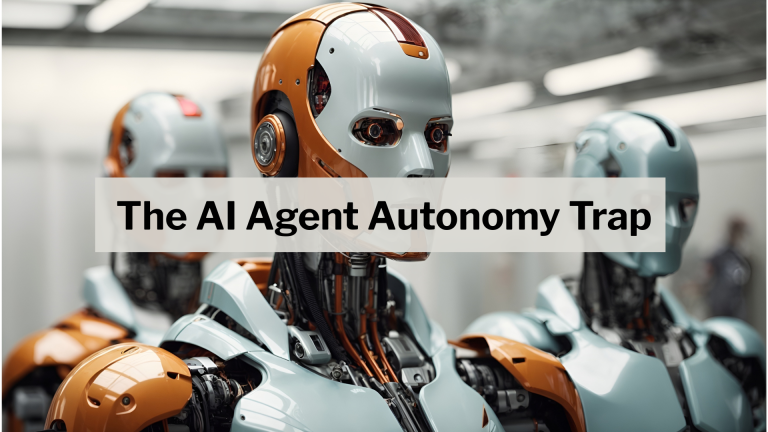
The Multiplier Problem: When AI Agents Scale Your Failures
AI agents can multiply your workforce output. But multiplication is agnostic to what’s being multiplied. Without context architecture, you’re not scaling productivity; you’re scaling risk.
By the end of 2026, Gartner predicts that 40% of enterprise applications will have AI agents built into them. That’s up from less than 5% at the start of 2025. But here’s what makes this different from the usual AI hype cycle: companies are actually seeing results. According to a recent PwC survey, 79% of organizations say they’re already using AI agents in some capacity. Among those who’ve deployed them, two-thirds report measurable productivity gains. So what changed? And what does this mean for organizations still trying to figure out whether AI is worth the investment?
In January 2025, Jensen Huang declared “The age of AI Agentics is here”. Salesforce, Microsoft, and nearly every major tech analyst agreed: 2025 would be the year AI agents went mainstream. But it wasn’t. What went wrong? The technology showed up. The organizations didn’t.
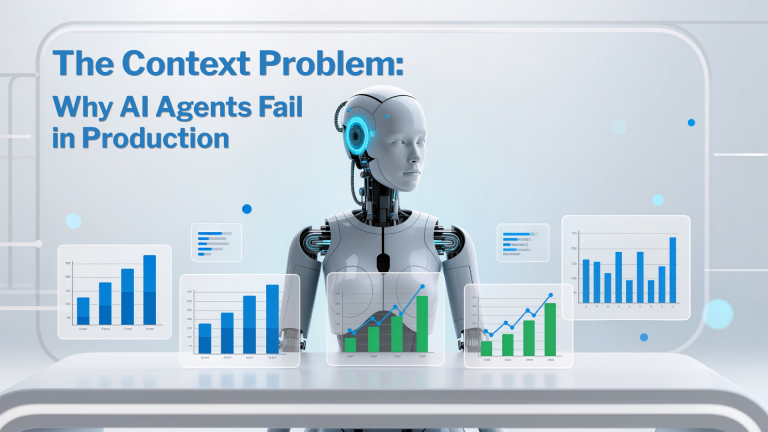
AI agents fail in production at twice the rate of traditional IT projects – not because the technology doesn’t work, but because we deploy them wrong. The pattern repeats: impressive demo, promising pilot, production disaster. The problem isn’t capability. It’s autonomy without context. This article examines why agents fail when given broad authority without explicit boundaries, and what a better deployment architecture looks like.