Articles

  • | |

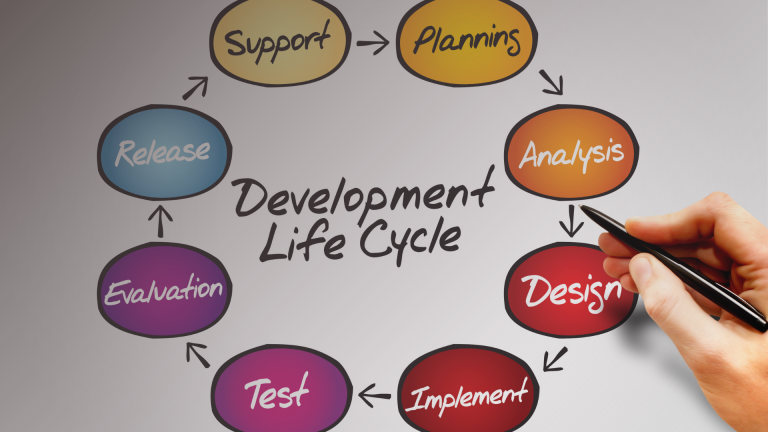
    DevOps: Engineering for Vibe Coders

    One of the biggest misconceptions in software development is thinking the work ends when the code runs locally. Modern AI-assisted development makes it incredibly easy to build and deploy applications quickly, but operational reliability introduces an entirely different layer of engineering complexity involving deployment, monitoring, automation, recovery, and infrastructure management. In this article, we explore DevOps fundamentals for vibe coders, including deployment strategy, observability, operational automation, infrastructure assumptions, recovery planning, and the engineering habits that help systems remain reliable in real-world environments.

  • |

    AI Agent Failure Handling

    Traditional software fails loudly: exceptions, stack traces, crashes. AI agents don’t work like that. They fail quietly and confidently, handing you a finished-looking answer to a question they couldn’t actually solve, while downstream steps treat that answer as ground truth. The mature agent systems aren’t the ones that fail least often; they’re the ones that fail visibly, by policy, with a name attached to what went wrong. This piece is about treating failure handling as a first-class part of agent design: how failures cluster by who can detect them, why detection has to live outside the agent itself, and what a real response policy looks like when something breaks at three in the morning.

  • | |

    Linting: Engineering for Vibe Coders

    One of the easiest ways for software quality to slowly degrade is allowing small inconsistencies, risky patterns, and avoidable mistakes to accumulate unnoticed over time. Modern AI-assisted development makes it incredibly easy to generate large amounts of code quickly, but speed also increases the risk of inconsistent structures, weak assumptions, duplicated logic, and hidden technical debt spreading across a project. In this article, we explore why linting matters for vibe coders, including AI-generated code consistency, readability, automated feedback loops, maintainability, and the engineering habits that help systems remain understandable as complexity grows.

  • |

    AI Agent Contracts: The Missing Primitive in Agentic Systems

    Gartner expects more than 40% of agentic AI projects to be cancelled by the end of 2027, and 78% of executives say they couldn’t pass an AI governance audit in the next 90 days. The standard explanations (better models, tighter prompts, more guardrails) keep falling short because they’re aimed at the wrong target. The real gap is structural: agents are operating without contracts. Not policy documents, not system prompts, not permissions matrices, but enforceable, bilateral agreements that define what the work is, what the agent is allowed to do, and what the agent and the surrounding system owe each other. Here’s why contracts are the missing primitive in agentic systems, and what builders and buyers should be doing about it right now.

  • | |

    Type Systems: Engineering for Vibe Coders

    One of the easiest ways to create fragile software is building systems where data structures constantly change without clear rules or expectations. Modern AI-assisted development makes it incredibly easy to generate large amounts of code quickly, but without strong type discipline, inconsistency and ambiguity spread just as fast. In this article, we explore why type systems matter for vibe coders, including data contracts, runtime validation, AI-generated code risks, shared workflows, and the engineering habits that help systems remain understandable and maintainable as complexity grows.

  • | |

    Concurrency Basics: Engineering for Vibe Coders

    One of the easiest ways to accidentally create unstable software is building systems that work perfectly for one user but fail unpredictably when multiple things happen at the same time. Modern AI-assisted development makes it incredibly easy to build asynchronous workflows, agent orchestration systems, background jobs, and distributed applications. But concurrency introduces a different kind of engineering complexity where timing, shared state, retries, and ordering suddenly matter. In this article, we explore concurrency basics for vibe coders, including race conditions, shared state, retries, event ordering, observability, and the engineering habits that help systems remain reliable under real-world usage.

  • |

    Vibe coding’s real problem isn’t the code

    AI writes really good code now. So why do so many vibe-coded projects still end up in trouble? Because code quality was never the thing to worry about. The real problem is the decisions getting made behind the code, silently, by an AI that doesn’t have your context. Here’s what those silent decisions cost you, and the two small habits that put you back in charge of your own project.

  • | |

    Cost of Ownership: Engineering for Vibe Coders

    One of the biggest traps in vibe coding is focusing entirely on how quickly something can be built while ignoring how expensive it becomes to operate, maintain, and evolve later. Modern AI-assisted development makes it incredibly easy to create complex systems fast. But every dependency, cloud service, AI workflow, and abstraction introduces long-term operational costs that are often invisible during prototyping. In this article, we explore how cost of ownership applies to vibe coding, including AI inference costs, operational complexity, vendor dependence, maintenance burden, and the engineering habits that help keep systems understandable, maintainable, and affordable over time.

  • |

    The AI Agent Authority Gap

    A customer service rep can type a discount into the system. The software will accept it. The customer would be thrilled. But the rep doesn’t do it, because they understand they’re not authorized to, even though they technically can. That gap between what someone can do and what they’re authorized to do is what keeps companies running. It’s also the thing missing from almost every AI agent deployment. This piece looks at why well-intentioned agents keep taking actions no one approved, why better permissions won’t fix it, and what AI agents are actually missing that every human employee already has.